
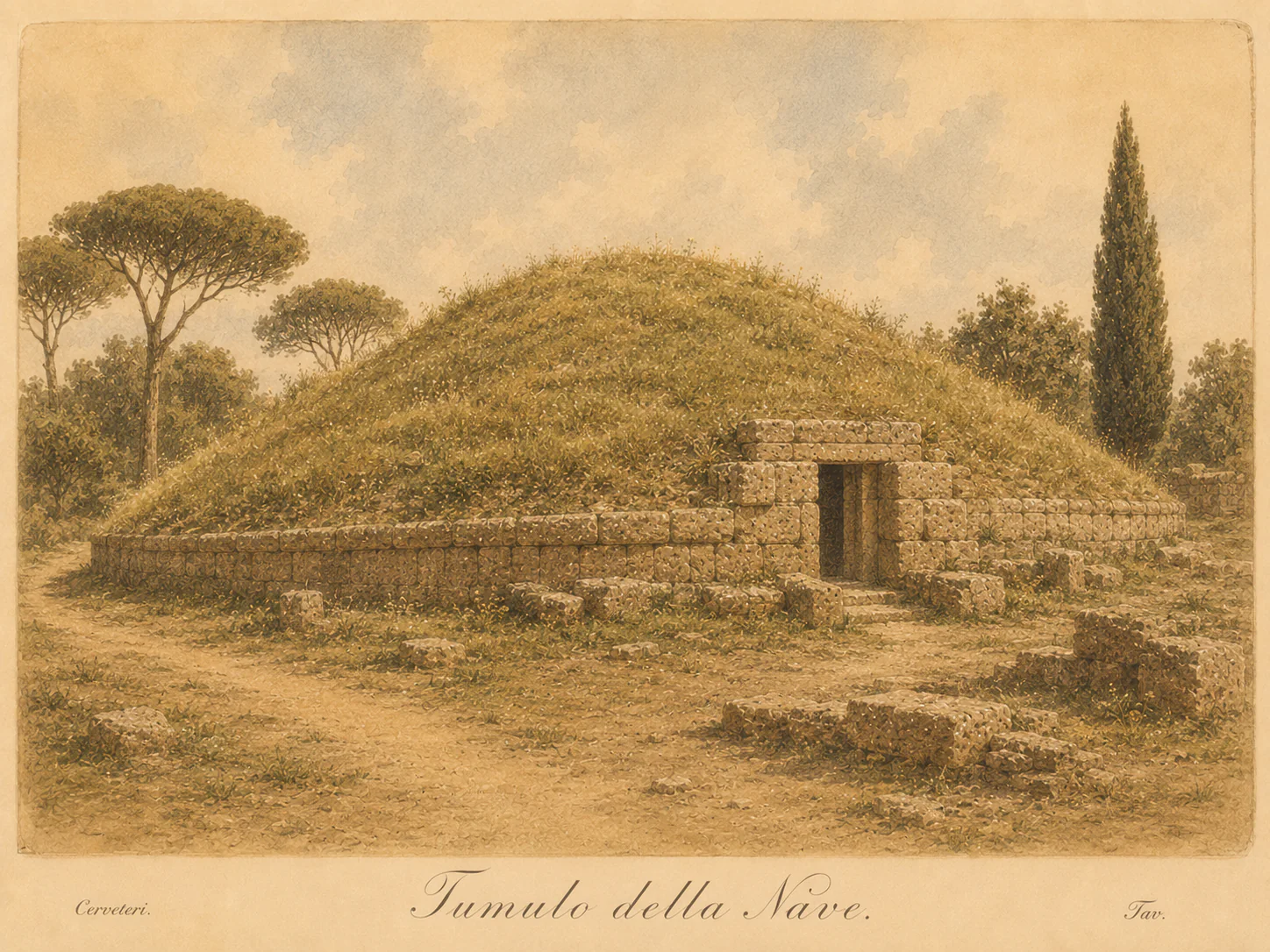
The mound contains three tombs; the earliest, dating to the second half of the 7th century BC, gives it its name. Its plan resembles that of the Tomb of the Painted Animals: a long dromos with three side cells leads to a circular vestibule and then to a round chamber divided by four pillars. A large ship was painted on the rear wall but has almost disappeared. In a city connected to the port of Pyrgi and Mediterranean exchange, the image may have evoked prestige, travel and maritime identity, although its precise meaning remains open to interpretation.
What to look for
The ship is no longer easily legible: what matters is that the lost painting shows how strongly the sea figured in the imagery of Caere's elites.
Discovery and excavation
The UNESCO dossier records its three tombs, plan and painted ship; the image's meaning is presented as interpretation, not as a certain biography of the deceased.