

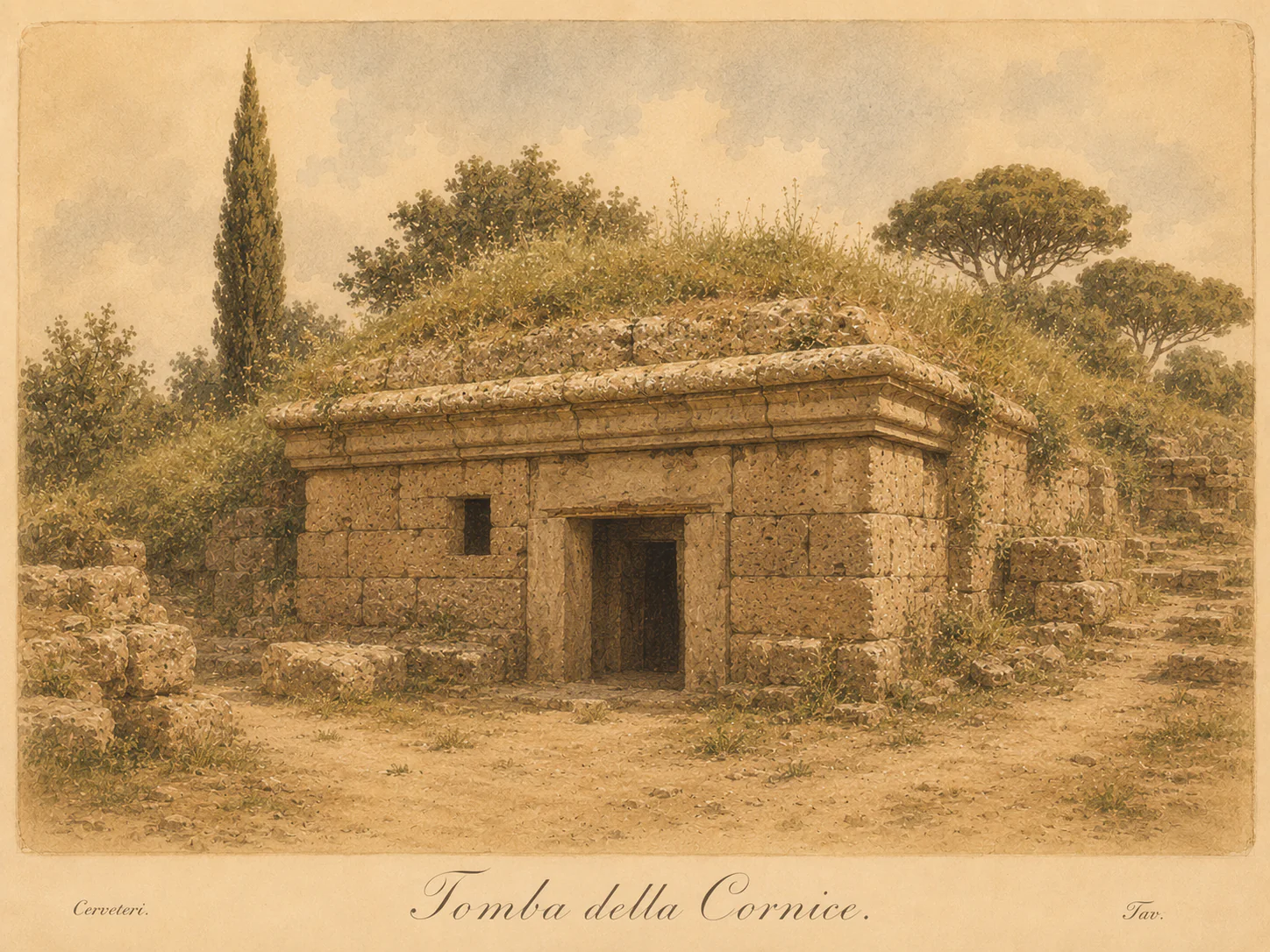
Dated to the early 6th century BC, the Tomb of the Moulding is arranged like a ceremonial dwelling. A short dromos leads to a vestibule with side cells; two rock-cut thrones with footstools flank the doorway. Four klinai line the vestibule walls, while three doorways with Doric-style profiles open into the rear burial chambers. Its modern name refers to the architectural mouldings carved in the tufa. The nearby “Cornice 2” repeats almost the same plan, evidence that this funerary space was designed as a coordinated whole.
What to look for
Look for the throne–vestibule–three-door sequence: it is not random decoration, but a translation into rock of the spaces and hierarchies of an aristocratic house.
Discovery and excavation
Architectural profile documented in the UNESCO nomination dossier for the Banditaccia necropolis.