
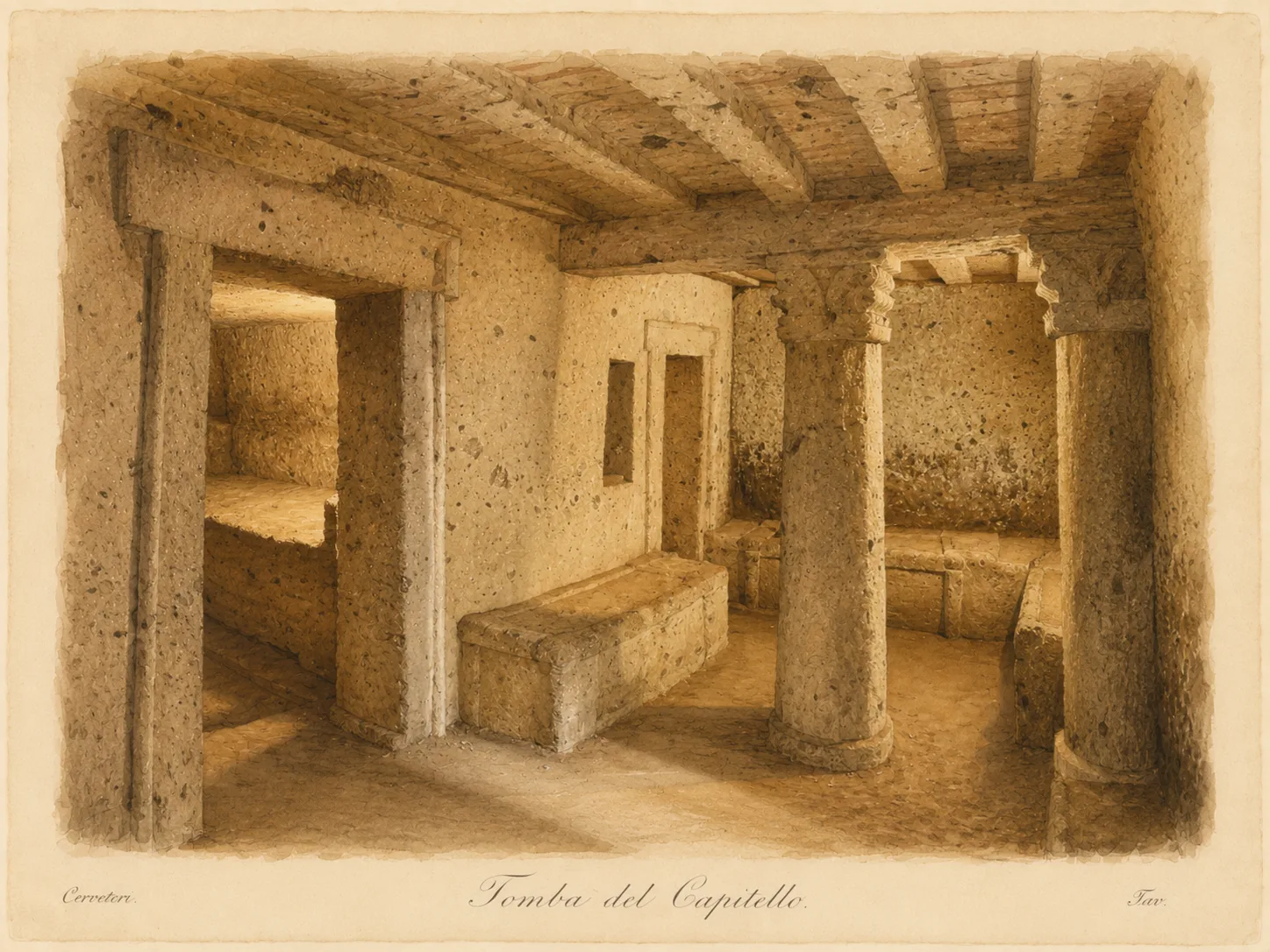
Datable to the late 6th century BC, the tomb stands in a prominent position along the main burial road. A dromos with two small side chambers leads into the tomb's broad transverse atrium, where two columns support a ceiling carved to imitate timber beams: their Aeolic-order capitals give the monument its modern name. At the rear, three burial chambers open off the hall, each designed for a couple according to a strict code: kline-shaped beds for men, beds with a triangular headrest for women, husband on the left and wife on the right as seen from the entrance.
What to look for
Look for the Aeolic capitals on the two central columns: they are among the few surviving examples of this architectural order anywhere in the necropolis.
Discovery and excavation
No discovery date or excavator is reliably documented in the available sources for this tomb.